 Meridexion
Two-stroke and four-stroke engines don’t just run differently – they order differently. A part that is routine stock for one is a twelve-week item for the other, and the reason has more to do with how the engine is built than with the part itself.
The engine does not care what the invoice says. It cares whether the part fits.
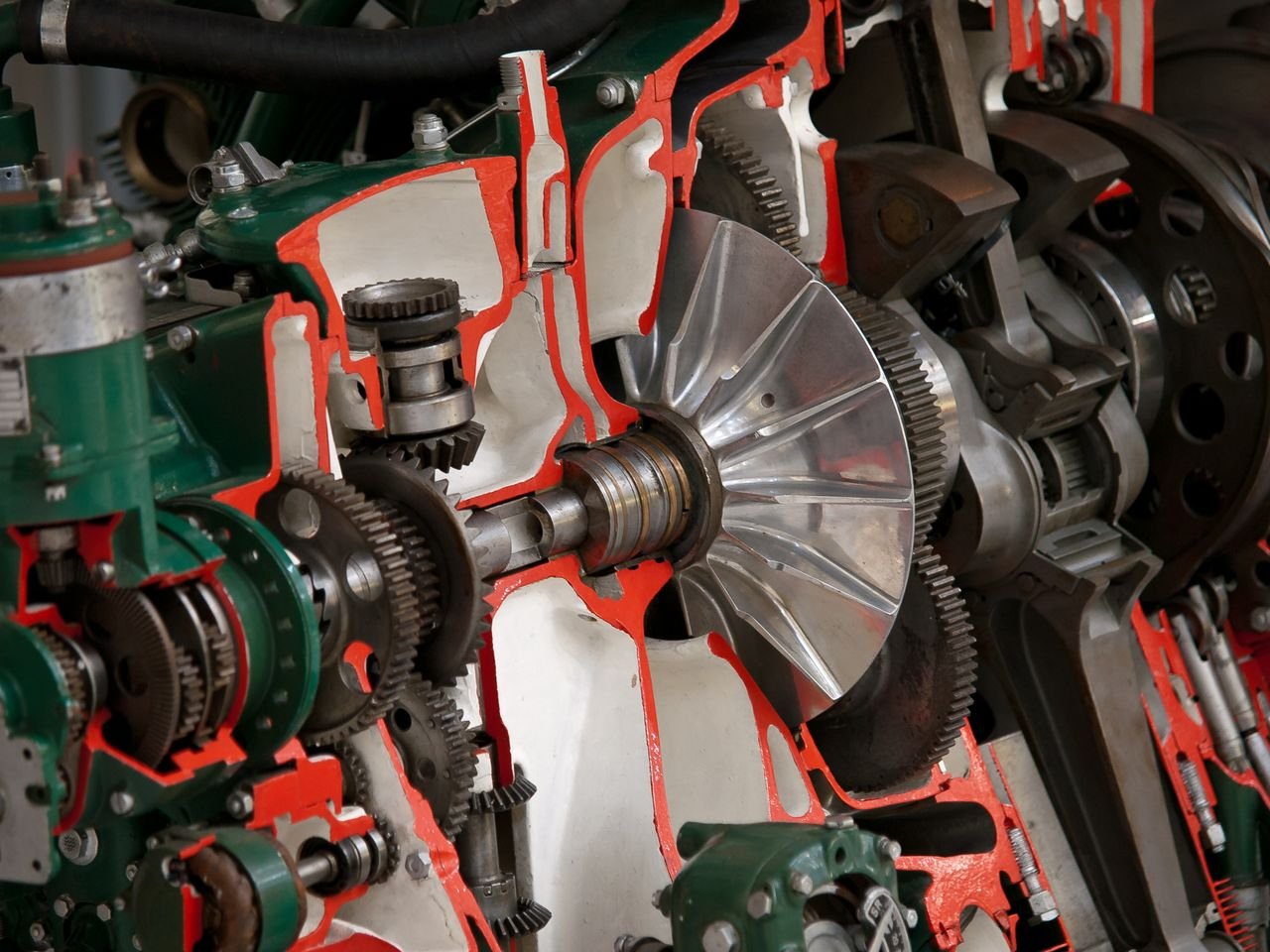
How the two types differ in service
Summarised:
| Two-stroke (slow speed) | Four-stroke (medium/high speed) | |
|---|---|---|
| Typical use | Main propulsion, direct drive | Auxiliary generators, smaller vessels |
| Speed | 60-120 rpm | 500-1,800 rpm |
| Cylinder wear | High, liner and ring replacement is routine | Lower, but more valves and injectors per kW |
| Parts supply | Fewer makers, long lead times on castings | Wide supplier base, faster availability |
| Typical order | Per cylinder set, planned against docking | Per engine set, planned against running hours |
What this changes for a spare parts order
Two-stroke: order by cylinder, plan by docking
On a large two-stroke engine, wear parts are matched to individual cylinders. A cylinder unit is a set: liner, piston crown, piston rings, cylinder cover, exhaust valve. When one unit is opened, the whole set is renewed, so the order is expressed per cylinder and often covers several cylinders at once.
The parts that matter most are also the slowest: cylinder covers and liners are large castings with long production lead times. On a vessel approaching a docking, these should be ordered months ahead rather than weeks.
Four-stroke: order by engine, plan by running hours
Four-stroke engines carry more small, fast-moving parts per kilowatt — injectors, valve components, turbocharger cartridges, fuel filters. Replacement is driven by running hours rather than by docking dates, and the same part is often shared across an engine family, which shortens lead time and widens the supplier base.
Auxiliary engines are covered in more detail under auxiliary engine parts.
Why the same part number can mean different things
Two-stroke and four-stroke part numbering isn’t interchangeable, and within one maker the same reference can exist in both families with different dimensions. This is one of the most common causes of a wrong shipment: a buyer quotes a number from an older four-stroke manual against a two-stroke engine of the same brand.
Always state the engine type, model and serial number together with the part number. Where the number is ambiguous, a photograph of the nameplate resolves it faster than any catalogue search.
Lead time expectations
- Consumables (filters, gaskets, seals): days to two weeks.
- Machined wear parts (rings, valve spindles, injector nozzles): two to four weeks.
- Castings and forgings (liners, covers, crankshafts): six to sixteen weeks depending on whether tooling exists.
For a two-stroke engine in a planned docking, that last category is what sets the schedule. See how sourcing works for how these are sequenced.
A few things people ask
Are two-stroke and four-stroke marine engine parts interchangeable?
No. Even where a maker uses a similar part number across both families, the dimensions, materials and loading are different. Always confirm the engine type and serial number with the part number.
Why do two-stroke engine parts have longer lead times?
Because the large components — cylinder liners, covers, piston crowns — are castings and forgings produced in low volumes, often to order. Four-stroke consumables and machined parts are produced in larger batches.
How many spare parts should I order per cylinder?
For a full cylinder overhaul, the set typically includes liner, piston crown, rings, cover, exhaust valve and all sealing elements. Quantity is per cylinder unit, multiplied by the number of units being opened.
Send us the details
Engine make, model, part number and quantity. If you only have a photo and a description, send that – we will work from it.