 Meridexion
The lube oil system does one job: keep a film of clean, correctly pressurised oil between every moving surface. It fails in the boring places – pumps wear, filters block, coolers leak – and none of it is dramatic until a bearing goes.
The expensive version of this mistake involves a crane and a surveyor.
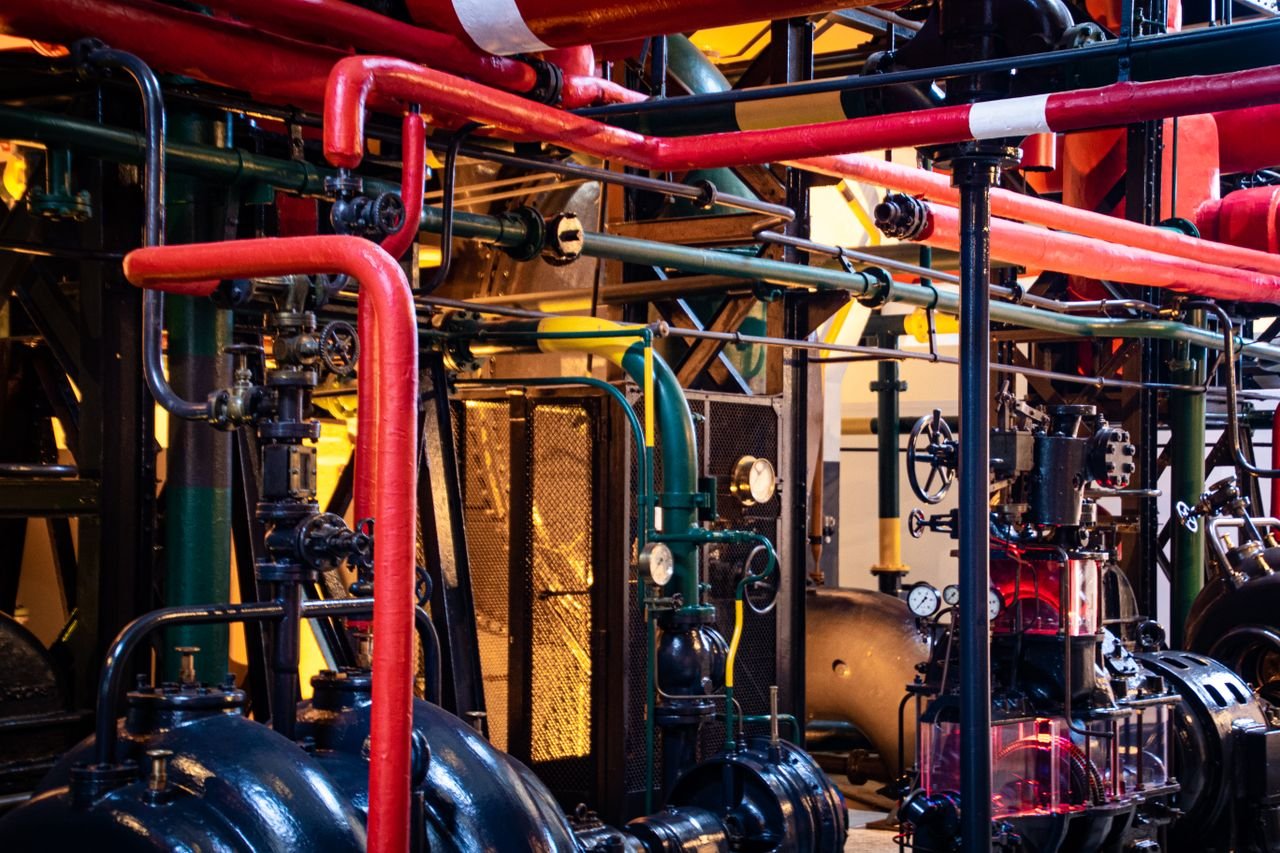
System layout
- Suction from the drain tank through a strainer.
- Pump — main lube oil pump, usually gear or screw type, with a standby pump.
- Cooler — shell-and-tube or plate type.
- Filters — automatic back-flushing or duplex manual type.
- Distribution — main bearings, crosshead, cylinder feeds, turbocharger.
- Return to the drain tank, with a centrifuge or separator in the loop.
Low pressure: what it usually means
The comparison, in one table:
| Observation | Likely cause | First check |
|---|---|---|
| Pressure falls gradually over weeks | Bearing wear increasing clearance | Bearing clearance measurements |
| Pressure falls suddenly | Filter bypass opening, pump failure, pipe fracture | Filter differential pressure, pump discharge |
| Pressure low at low load only | Pump wear, relief valve passing | Relief valve setting, pump overhaul record |
| Pressure fluctuating | Air in suction line, strainer partially blocked | Suction strainer, tank level |
Before condemning a pump, check the filters and strainers. A blocked filter is far more common than a worn pump, and far cheaper to fix.
High temperature
Rising oil temperature at constant load almost always means the cooler is fouled or the cooling water flow has fallen. Check in this order: seawater flow and strainer, cooler approach temperature, then the thermostatic valve. A stuck valve is a frequent and inexpensive cause.
The parts that actually wear
Routine
- Filter elements and strainer baskets
- O-rings and gaskets for filter housings
- Cooler anodes
Condition-based
- Pump internals — gears, screws, casing liners, shaft seals
- Relief valve springs and seats
- Cooler tube bundle or plate pack
- Automatic filter back-flush components
Full component coverage is under lubrication system parts.
Contamination: the hidden cost
Water, fuel and wear metal in the oil accelerate every downstream failure. The separator, the filters and oil analysis form one system: if the centrifuge is not working, filters block faster and bearings wear faster. Fuel dilution usually points to a leaking injection pump or fuel cooler.
What we need from you pump parts
- Pump make, type and serial number
- Whether gears, screws, casing, or complete pump
- Seal type and material
- Relief valve setting required
- Rotation direction and mounting configuration
Pumps are often bought as a complete unit when internals are heavily worn, because labour for rebuilding can exceed the difference in price. Ask for both options — see how sourcing works.
Get this sourced
Send what you have – part number, drawing, or a photo. We confirm the specification before we quote, not after.
Worth noting
If you remember one thing from this page, make it this one.
People also ask
What causes low lube oil pressure on a marine engine?
Most often a blocked filter or strainer, then bearing wear increasing clearance, then pump wear or a passing relief valve. Check filters first, because they are the cheapest and most frequent cause.
How often should lube oil filters be replaced?
On the maker’s running-hour interval, or when differential pressure reaches the limit. Automatic back-flushing filters are checked on the same schedule but replaced less often.
Can I use an equivalent filter element in the lube oil system?
Yes, provided the micron rating, flow capacity and bypass valve setting match the original. A filter with the wrong bypass setting can either starve the engine or fail to protect it.